
The African penguin (Spheniscus demersus) is the only penguin species that breeds on the African continent, found exclusively along the southwestern coast of Africa. Also known as the “jackass penguin” due to its loud, donkey-like braying call, this flightless marine bird is celebrated for its distinctive appearance and specialised adaptations for warmer climates. Tragically, it is classified as critically endangered due to rapid population declines driven by overfishing, habitat loss, and climate change. But due to the efforts of SANCCOB and its supporters all is not lost and there is hope!
What distinguishes the African penguin and how do we identify the species?
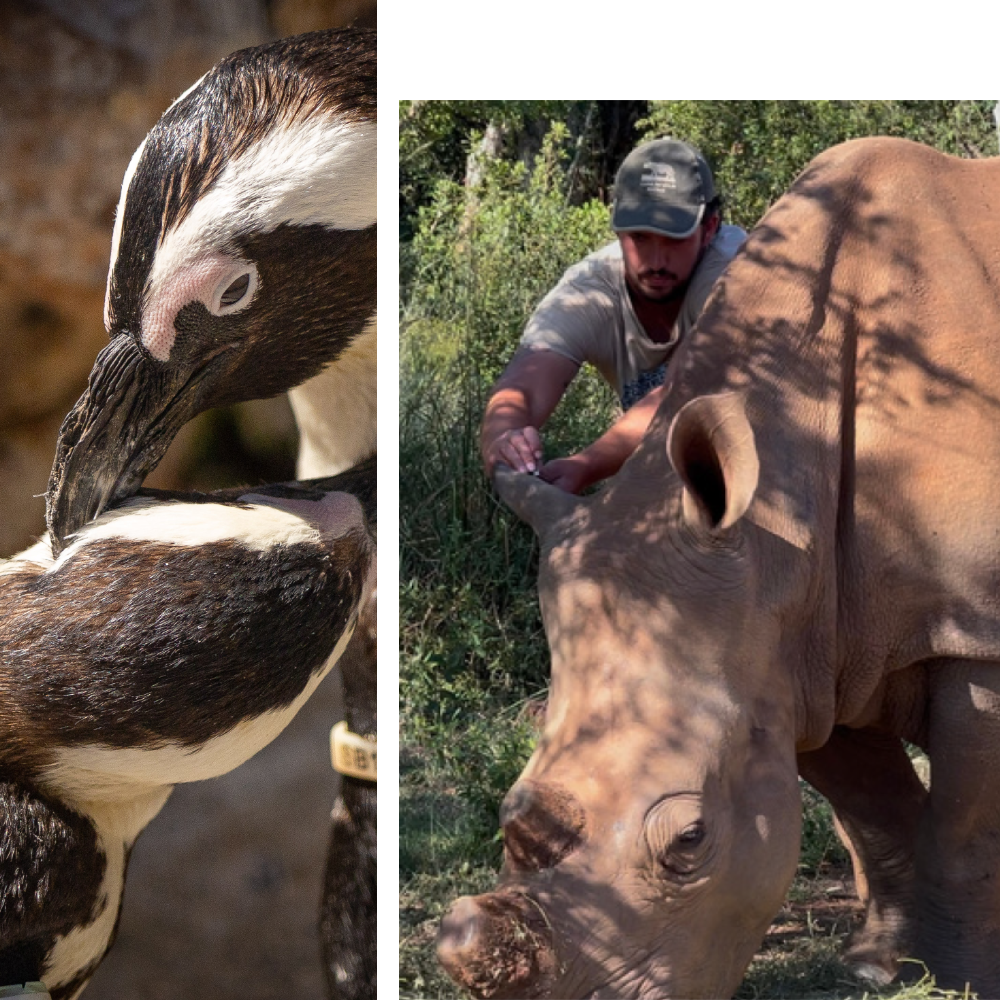
Unlike some of their bigger relatives, African penguins are small-to-medium penguins, standing roughly 60 to 70 centimetres tall and weighing between 2 and 5 kilograms. They feature a white belly and black back. This pattern, called countershading, protects them from predators by blending in with the dark ocean from above and the bright sky from below.
A distinct black horseshoe-shaped band runs across their chest. Every individual also has a unique pattern of black spots on its chest, which scientists use like fingerprints to identify individual birds.
You may have also noticed that they possess bare, pink patches of skin above their eyes. These function as a cooling mechanism; when the penguin gets hot, blood rushes to these patches to be cooled by the surrounding air.
Where do we find African penguins?
They are restricted to the cold, nutrient-rich waters of the Benguela Current along the coasts of South Africa and Namibia. They congregate on 28 rocky islands and a few mainland beaches. Famous mainland colonies accessible to tourists include Boulders Beach near Cape Town and Stony Point in Betty’s Bay.
As many tourists have seen, to avoid the harsh African sun, they nest in burrows dug into guano (hardened seabird droppings) or sand, or under coastal bushes and rocks.
What about diet? They are pursuit divers that feed heavily on schooling forage fish, particularly sardines and anchovies, alongside occasional squid and small crustaceans.
They are amazing swimmers and divers. Their bodies are streamlined bodies and stiff, paddle-like flippers allow them to “fly” underwater at speeds reaching up to 20 kilometres per hour. While most dives last under a minute, they can stay submerged for up to 2.5 minutes and dive to depths of over 60 metres.
One of the most endearing social features of the African penguin is they generally mate for life, and they return to the exact same nesting site year after year to raise their young together. Both parents take equal turns incubating the typical clutch of two eggs for about 40 days, and they share the responsibility of feeding the chicks.
Once a year, adults undergo a “catastrophic molt,” losing all their feathers at once. Because they lose their waterproof insulation, they are confined to land for roughly three weeks, fasting until their new feathers grow in.
Conservation Status and Threats
The African penguin population has plummeted by over 95% since pre-industrial times, shifting its status to Critically Endangered due to a number of factors.
- Food Scarcity: Overfishing and shifting ocean currents have severely depleted their main food sources (sardines and anchovies) near their breeding colonies.
- Habitat Destruction: Historical harvesting of guano for fertiliser stripped the birds of their natural nesting material, forcing them to nest in open sand where they are vulnerable to heatstroke and predators.
- Oil Spills: Marine traffic around major South African shipping ports poses a constant threat of toxic oil coating their feathers.
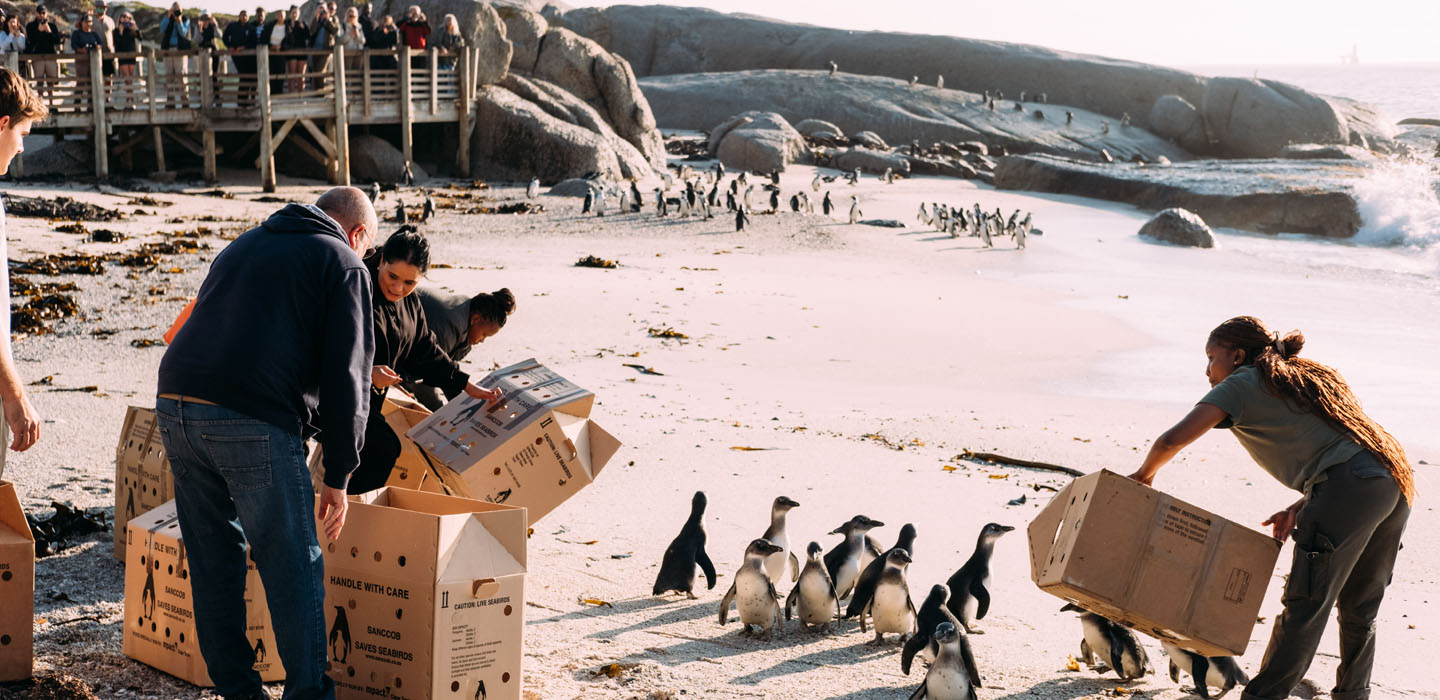
Thus, it is vital that conservation bodies like SANCCOB actively rescue, rehabilitate, and hand-rear abandoned chicks to bolster wild populations.
SANCCOB needs almost a ton of fish per week to feed all the birds in their care, so if you’d like to support their brilliant work and donate a box of fish, at just R175, click the following link: https://tr.ee/FeedAfricanPenguinChicks
The Spirit Foundation is proud to support and partner with SANCCOB. If you would like to know more about the Spirit Foundation, please click on the link.