

Every October, a unique alignment of global and local observances turns our collective focus toward a sensory superpower we often take for granted: our vision.
In South Africa, October marks a critical intersection of advocacy. It anchors Eye Care Awareness Month and peaks internationally with World Sight Day and culminates in the celebration of White Cane Day on 15 October.
Together, these dates form a narrative arc that moves from preventative medicine to the radical acceptance and empowerment of those living with permanent vision loss. In Cape Town, this narrative comes to life through the vital community work of the League of Friends of the Blind (LOFOB), supported by the Spirit Foundation.
Prevent, Protect, and Pivot
The statistics surrounding eye health are startling. Globally, over one billion people live with a visual impairment that could have been prevented or has yet to be addressed. In South Africa, where systemic barriers block equitable healthcare access, the situation is acute. Yet, the core message of Eye Care Awareness Month is one of profound hope: 75% of all blindness is completely avoidable through early detection, simple lifestyle shifts, or timely treatment.
This year’s global World Sight Day campaign, operating under the universal banner #LoveYourEyes, directly targets these gaps. It acts as an urgent reminder that protecting sight is not a luxury; it is a foundational pillar of modern education, safe driving, and economic livelihood.
However, medical interventions cannot solve every case. When permanent vision loss occurs, the focus must pivot from medical prevention to social inclusion and independent mobility. This is precisely where White Cane Safety Day bridges the gap. Far from a symbol of limitation, the white cane is an empowering tool of liberty, giving individuals with low or no vision the confidence to navigate public spaces safely and claim their legal right-of-way.
LOFOB: Transforming Awareness into Action
A leading force in changing the local landscape for the visually impaired is LOFOB. Based in the Western Cape, this non-profit organisation rejects the idea that a visual impairment spells the end of a productive life. Instead, they focus heavily on comprehensive rehabilitation, early childhood development, and specialised independent living skills.
For LOFOB, the white cane is a core curriculum item. Their orientation and mobility practitioners work daily to train individuals to map out environments, detect physical obstacles and reclaim their autonomy. LOFOB’s holistic approach ensures that people transitioning into blindness don’t merely survive—they learn to thrive in a world designed primarily for the sighted.
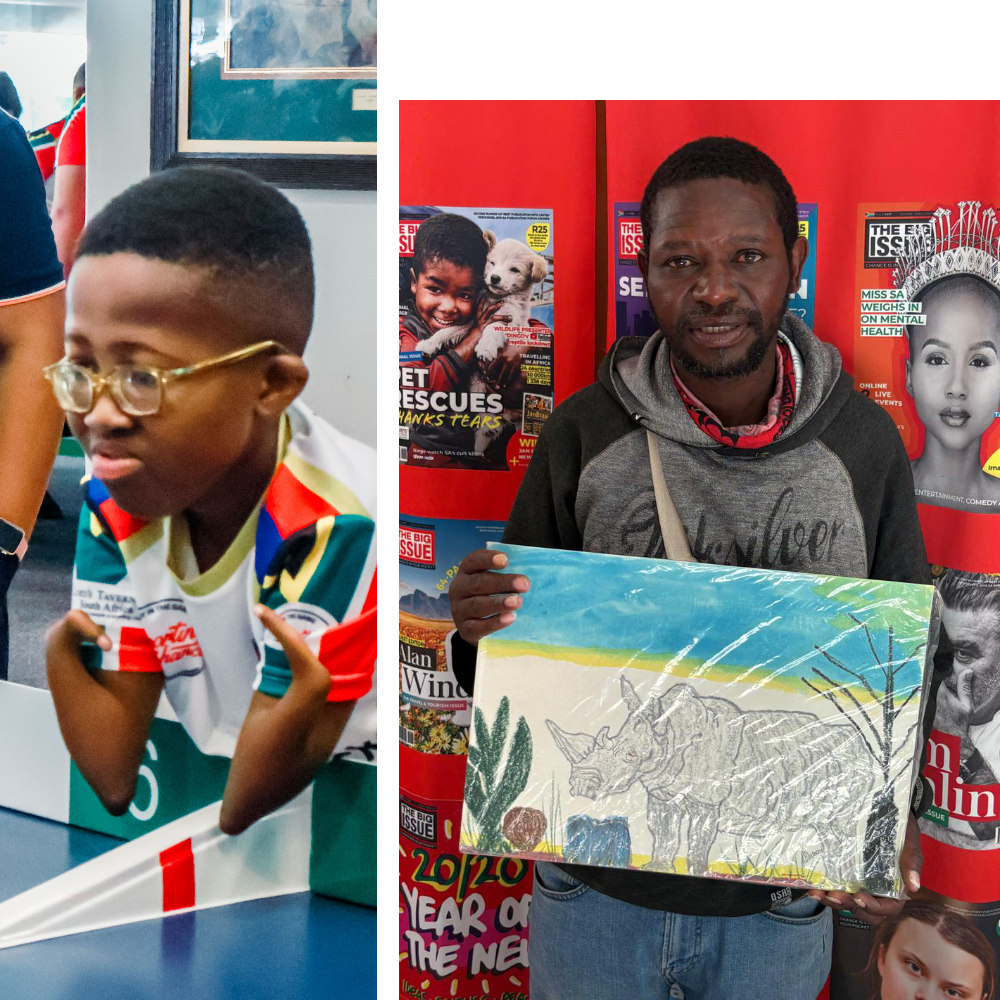
The profound impact of this work is evident in the individual lives they reconstruct. Consider the story of a 15-year-old student from Lotus River. Struggling deeply with her visual impairment, she failed Grade 10 twice as her confidence and academic access crumbled. Recognising her untapped potential, LOFOB stepped into the gaps, providing specialised computer literacy training while actively collaborating with her school teachers to foster an inclusive classroom setup. Today, her trajectory is completely transformed—a tangible victory showcasing how early intervention, combined with the right adaptive tools, can spark resilience and rewrite a child’s future.
Driven by Purpose: The Spirit Foundation
The partnership between the Spirit Foundation and LOFOB goes beyond basic corporate charity; it is an alignment of vision. By funding LOFOB’s core training projects, the Spirit Foundation ensures that vulnerable individuals, particularly from under-resourced communities, gain unimpeded access to technology, mobility tools and psychological support. This investment actively breaks down the systemic isolation that frequently shadows visual disability.
A Shared Vision for Tomorrow
As the calendar moves through October’s Eye Care Awareness Month, the ultimate goal remains clear: to build an inclusive society where nobody is left in the dark. We must look after our own vision by prioritising regular examinations, but we must also look out for our neighbours. By supporting the ongoing work of pioneering organisations like LOFOB and dedicated benefactors like the Spirit Foundation, South Africans can ensure that independence, dignity and opportunity remain accessible to all, regardless of how they see the world.